

Buna - The Ethiopian Coffee Ceremony:
Tradition, Hospitality and Etiquette
Reflections on my visit to Ethiopia: from roasting and aroma to three rounds of coffee - a gathering of tradition, attention and respect
In some places, “Come over for coffee” is an invitation to truly pause. In Ethiopia, making coffee becomes a gathering in its own right: beans are roasted, ground, brewed and poured, while people talk and make time for one another. This article and its photographs grew out of my visit to Ethiopia, offering a chance to revisit a tradition in which hospitality begins long before the first sip.
Buna means coffee in Amharic. The coffee ceremony is an important part of social life and hospitality in Ethiopia, taking place in homes as well as public settings. It brings together family, neighbours and friends, with care devoted both to preparation and to spending time together. Customs vary across regions, communities and households; there is no single way that everyone must follow.
Athiopia and Coffee: Plants, Culture Eand Legend
Ethiopia is the birthplace of Arabica coffee. Ethiopian coffees offer a wide range of flavours and aromas, shaped by their growing regions, processing methods and roasting techniques. It would therefore be misleading to describe all Ethiopian coffee as having one distinctive flavour or aroma.
A familiar legend tells of a goatherd who noticed that his goats became unusually energetic after eating the fruit of the coffee plant. This is a folk tale about the discovery of coffee, rather than an established historical account. Ethiopia’s connection with coffee runs deep, regardless of the details of the legend: it is woven into agriculture, everyday life and the culture of hospitality.
The Coffee Ceremony: Time Is Part of Hospitality
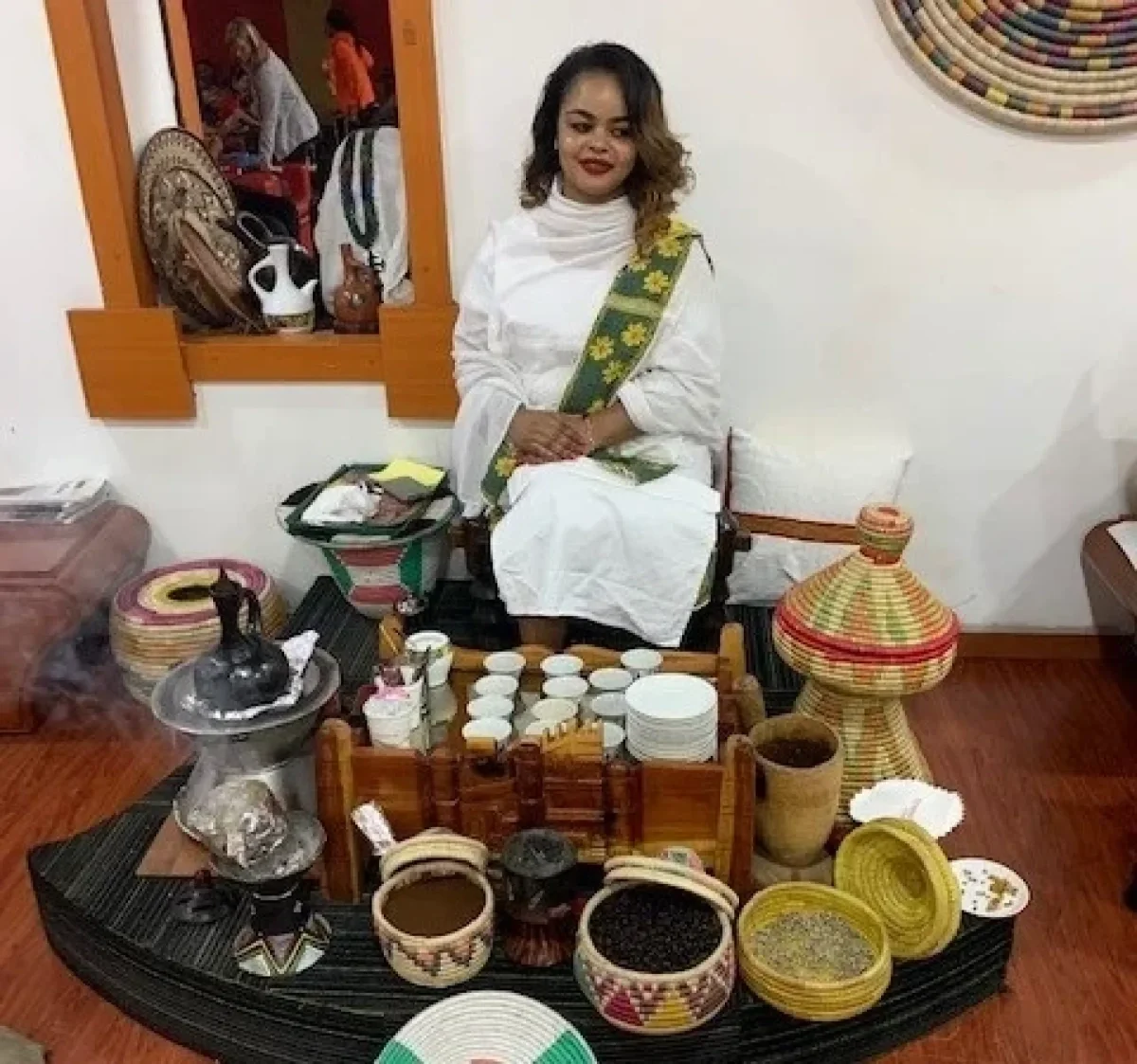
Traditionally, the ceremony is most often led by a woman of the household. On festive occasions, you may see traditional dress, carefully arranged cups, and fresh greenery or grass spread around the serving area. The length of the gathering varies, sometimes lasting an hour or more. It is best approached with a willingness to stay, listen and enjoy the company.
Step One — Washing, Roasting and Savouring the Aroma
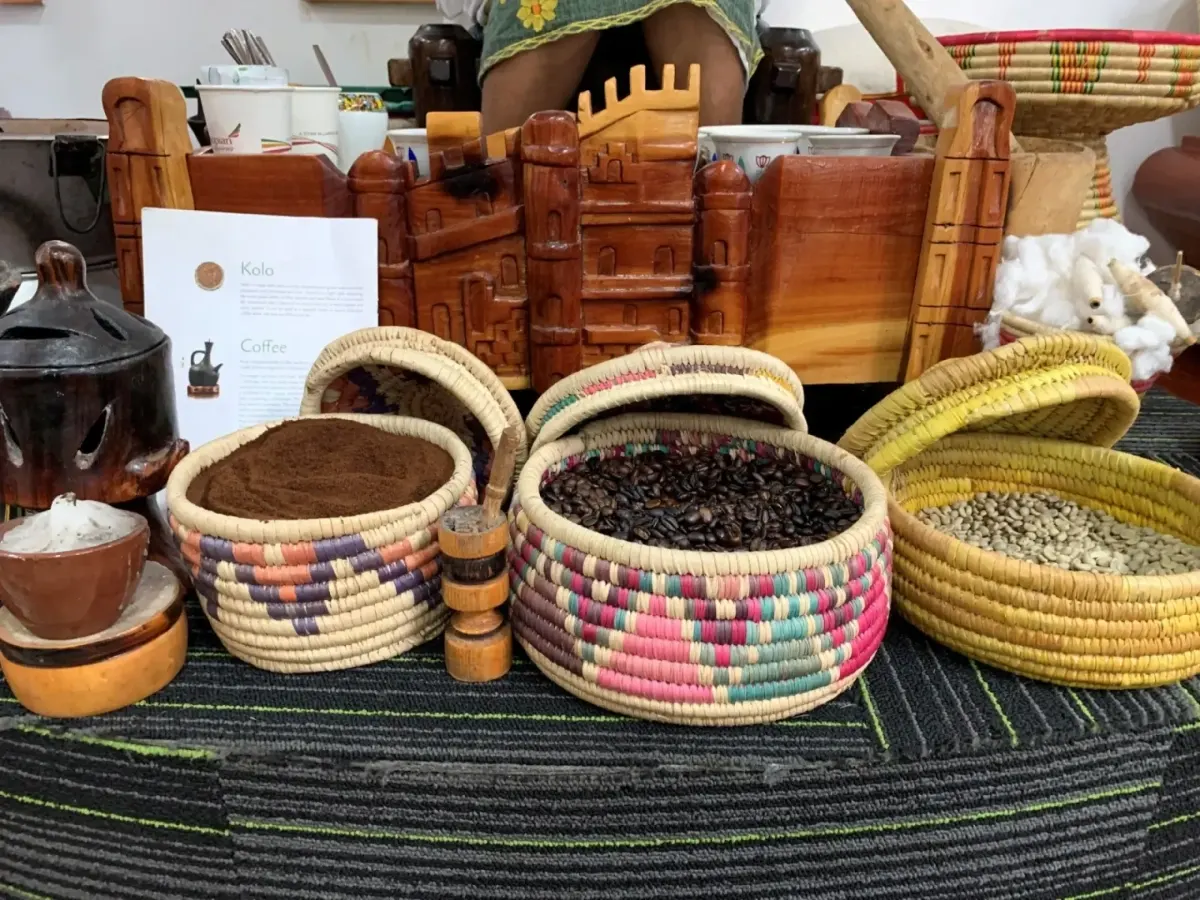
The green coffee beans are washed and roasted in a pan, sometimes over charcoal. As they roast, the beans darken and release a rich aroma. The pan is often brought close to the guests so that they can enjoy the fragrance. Even before the coffee is served, guests are already part of the experience.
Step Two — Pounding and Grinding
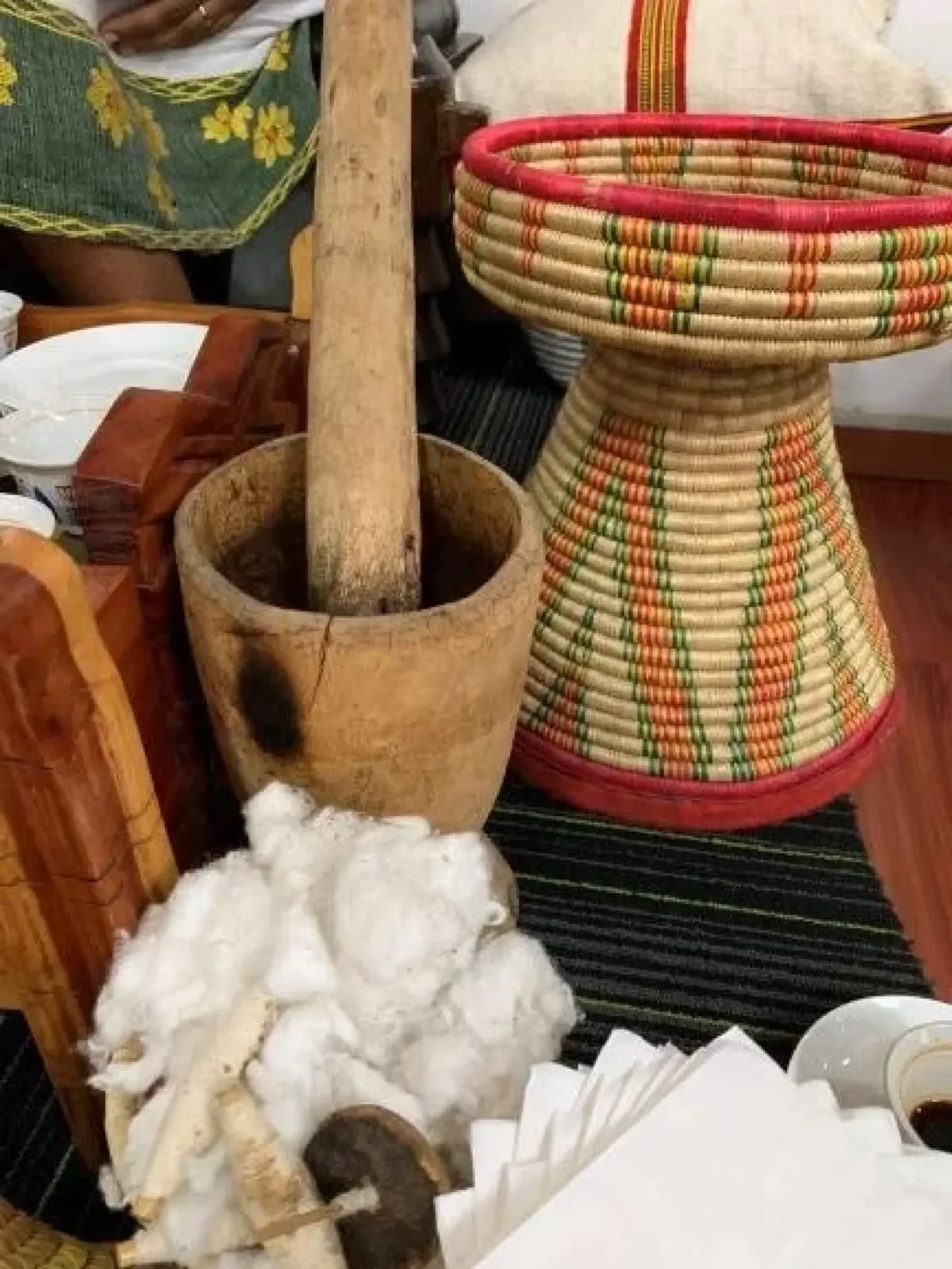
After roasting, the beans are ground using a mortar and pestle. Tools and techniques may vary; the photograph from my visit shows a wooden mortar and pestle. The pounding adds its own rhythm and sound to the gathering.
Step Three — Brewing in the Jebena
The ground coffee is brewed with water in a traditional pot called a jebena, usually made of clay, with a rounded body and a narrow neck. Preparing it takes skill and careful attention to the heat and boiling process. Before pouring, the coffee grounds are allowed to settle.
Step Four — Incense and the Atmosphere of Hospitality
In many settings, incense is burned alongside the preparation of the coffee. Its fragrance mingles with the aroma of the roasted beans, adding another layer to the sensory experience. The incense is burned in a separate vessel beside the ceremony; it is not added to the coffee.
Serving the Coffee — Three Rounds of Togetherness
The coffee is poured into small cups, usually without handles, sometimes called sini. It is poured skilfully in a thin stream, sometimes from a height. In many traditions, elders and honoured guests are served first.
The traditional ceremony usually includes three rounds: Abol, the first; Tona, the second; and Baraka, the third, whose name is associated with blessing. Water is added to the coffee remaining in the pot and it is brewed again, so the drink gradually becomes weaker. These are three servings over the course of the gathering, rather than three cups presented at once.
The coffee may be accompanied by popcorn, roasted grains and pulses, or traditional bread such as dabo. Refreshments vary from place to place. So do preferences for sweetening and seasoning: sugar is common in many homes, while some traditions include salt or other additions.
A small cup, time for conversation and plenty of attention — a moment from my visit to Ethiopia.

Pictured: injera from my visit to Ethiopia. It is part of the local cuisine, but it is not a standard or essential accompaniment to the coffee ceremony.

Buna Etiquette: How to Be a Considerate Guest
Wait for an invitation and follow your hosts’ lead. In a private home, show respect by allowing your hosts to guide the occasion and waiting to be offered a seat and a cup of coffee.
Make time for the gathering. If you know you will need to leave early, explain warmly before the ceremony begins. If you must leave, say goodbye and thank your hosts; do not simply disappear midway through.
Respect the three rounds without feeling obliged to drink them all. Staying for the full gathering is a thoughtful gesture when possible, but you need not drink more than feels right for you. You might say, “Thank you, the coffee is lovely. I’ve had enough for now, but I’d love to stay and enjoy your company.”
Ask politely. There is no blanket rule against asking for sugar. You can ask whether any is available, accept the answer graciously and avoid demanding changes to the entire preparation.
Give your hosts your attention. Put your phone aside, show interest and acknowledge the care they have taken. Ask permission before photographing people or the ceremony in their home.
Thank your hosts for their time and hospitality. If a blessing is offered, listen respectfully and respond with sensitivity to the occasion and your own beliefs. There is no single response required of every guest.
What Can Buna Teach Us About Our Own Hospitality?
In a world where coffee is often picked up on the way to the next meeting, Buna reminds us of the value of spending time together. We need not adopt an entire ceremony to learn from it: we can serve a little more slowly, put our phones away and give our guests the feeling that we have time for them.
Sometimes, the most important thing we serve with coffee is our attention.
“Manners are the human language that crosses borders, bridges differences and connects people.”
Discover more about the culture, traditions and holidays of the Ethiopian Jewish community: Read about Sigd and its significance.
© Tami Lancut Leibovitz. All rights reserved.


Comments
Add a comment
Your email will not be published. The comment appears after approval. * Required field